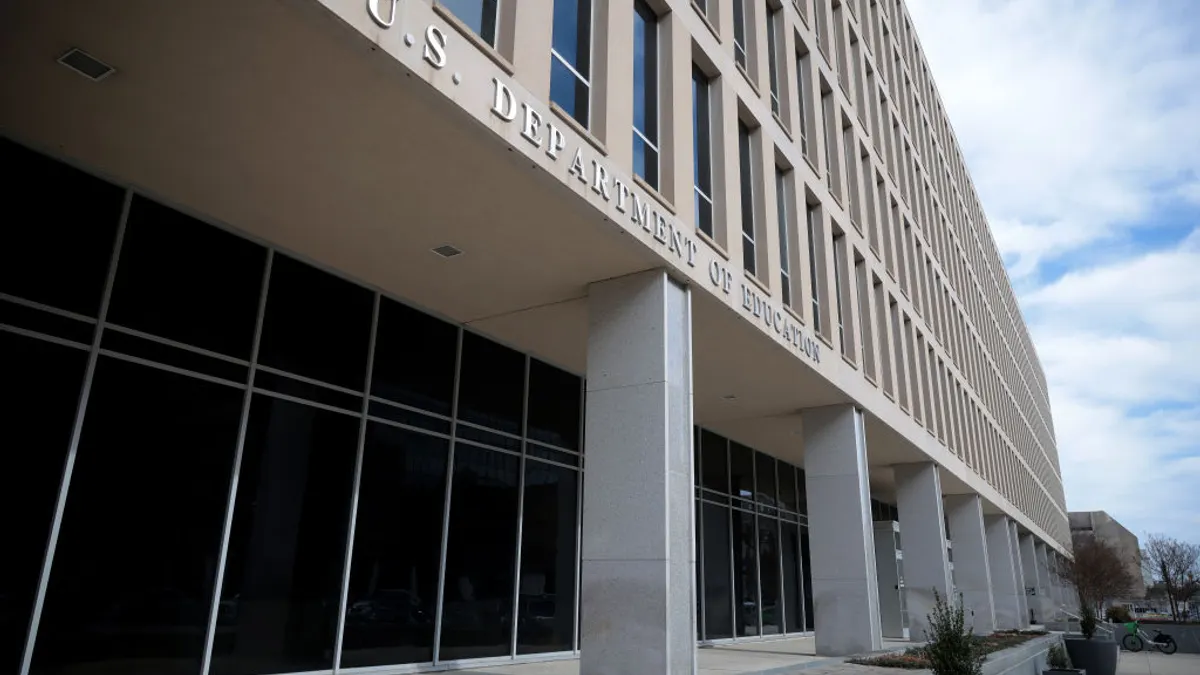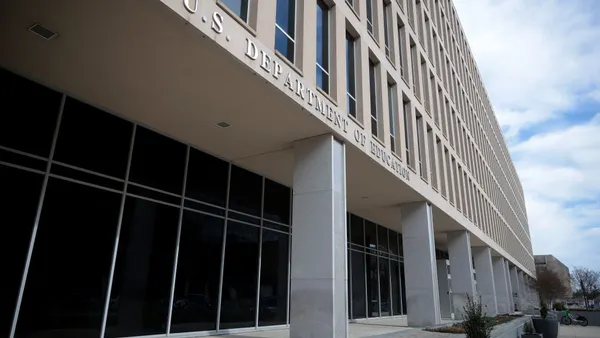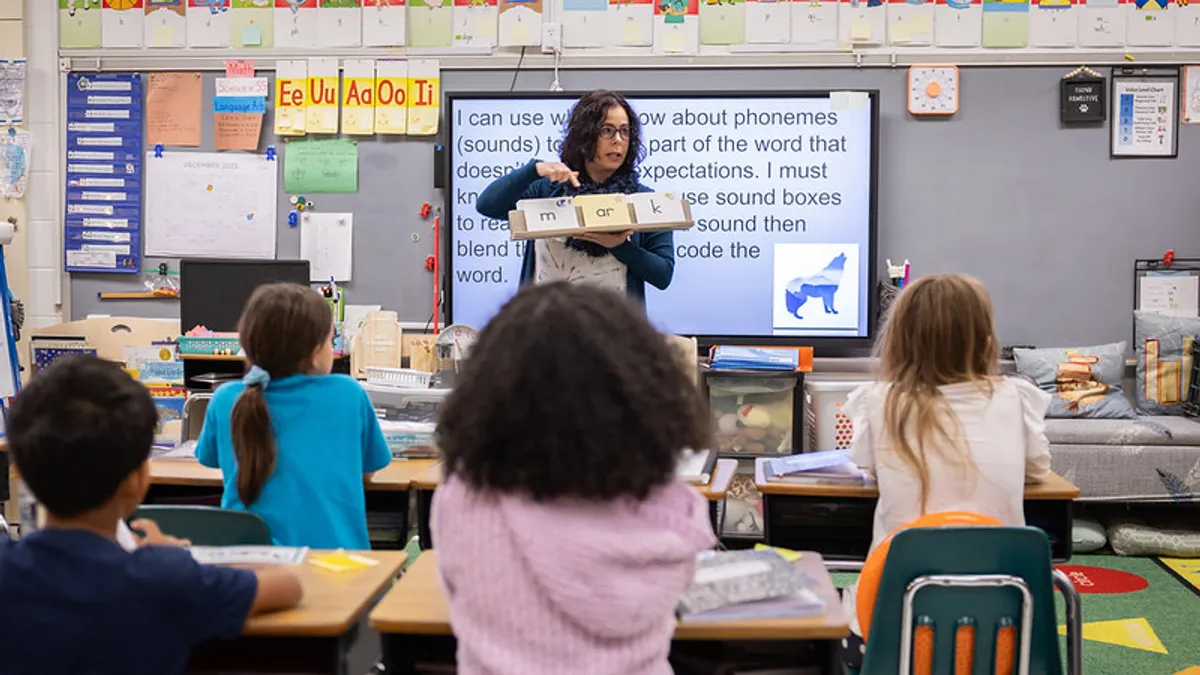
The U.S. Department of Education announced Tuesday it is transferring certain special education programming and civil rights enforcement activities to other federal agencies in a move aimed at reducing bureaucracy and improving services.
Under the new interagency agreements, some programs under the Office of Special Education and Rehabilitative Services will move to the U.S. Department of Health and Human Services, while some investigation and enforcement activities will move from the Office for Civil Rights to the U.S. Department of Justice.
The special education agreement with HHS is meant to better align federal services for children with disabilities under the Individuals with Disabilities Education Act, said a senior department official on a press call Tuesday.
Under agreements between OCR and the Justice Department's Civil Rights Division, Justice will take on some complaint education investigation and resolution processes.
The Education Department will, however, retain statutory responsibility for the functions being outsourced for special education and civil rights, the official said.
The four new interagency agreements add to the 10 already made between the Education Department and other federal agencies in the past year, with Tuesday's move of civil rights and special education responsibilities among the most anticipated ones to date. They mark part of the Trump administration's continuing plan to downsize and eventually eliminate the 46-year-old Education Department.
But several education organizations and disability rights advocates have warned that the program transfers will diminish oversight of core federal functions, including student civil rights protections and special education accountability.
Changes to special ed management
Under the interagency agreement for special education, HHS — with guidance from OSERS — will conduct grant administration, enforcement, compliance and monitoring activities. HHS will also take charge of annual state IDEA performance determinations.
For its part, OSERS will coordinate the clearance of policy and grant documents and provide technical assistance and stakeholder outreach.
The senior Education Department official said during the press call that the interagency agreement does not alter IDEA's guarantee for a free, appropriate public education for students with disabilities.
"No agreement can alter the rights that students with disabilities are afforded under federal law," the official said. Rather, the partnership aims to ensure that "programs that support individuals with disabilities are administered more effectively and in a way that results in better outcomes for individuals with disabilities."
About 8.2 million students ages 3-21 qualified for services under IDEA in 2024 — a 3.8% increase over the year before. IDEA also provides early intervention supports to nearly 460,000 infants and toddlers with disabilities and developmental delays.
A fact sheet released Tuesday by the Education Department uses HHS' administration of Head Start as an example of how the two agencies' current work complements each other. Head Start programs are required to serve a minimum of 10% of children with disabilities and coordinate with school districts to deliver IDEA services.
Fiscal year 2026 grants for IDEA programs will continue to be managed by the Education Department's grant system, but subsequent allocations will be handled by HHS' grant and payment management system. OSERS oversees about $15.5 billion in FY26 for early intervention and K-12 special education services.
According to the fact sheet, states and grantees shouldn't see any programmatic disruptions from the new arrangement.
The Education Department had earlier voiced its intention to outsource special education programs, bringing an outcry from some education organizations, disability rights advocacy groups and lawmakers.
Opponents said they worried about a loss of civil rights protections for students with disabilities if oversight for the programs moved. They also expressed concern about reduced federal accountability if special education programs transferred out of the Education Department.
More than 850 local, state and national organizations released a joint commitment statement in November to support continued commitment to federal special education law and to oppose any separation of services for students with disabilities from the Education Department.
In that joint statement, the organizations said the Education Department “should remain an independent agency that is fully staffed and funded to oversee federal laws including IDEA and Section 504.” The coalition also wrote that states should retain substantial responsibility for special education, with the federal government playing a “crucial role” through funding, policy and ensuring equitable educational opportunities.
But on Tuesday's press call, the senior official said that during listening sessions U.S. Education Secretary Linda McMahon held with "thousands" of parents, educators, administrators and advocates, families described "bureaucratic, costly efforts and additional barriers to securing the services their children need, and to which they are entitled to under federal law."
What is being transferred for OCR?
The Education Department said that while the federal agency will retain management and leadership of OCR, it will refer civil rights complaints to the Justice Department for evaluation, investigation and potential resolution. The agency did not specify whether it plans to refer all or only certain types of complaints to the Justice Department, and said the departments are still ironing out shared responsibilities and workload.
In some cases, OCR will also resolve investigations based on the Justice Department's proposed findings and resolutions, said another senior department official on the Tuesday press call. OCR, however, will make final determinations on whether to pursue actions for administrative enforcement or to refer cases to the Justice Department for judicial enforcement, said that official.
OCR will continue to facilitate mediation and negotiation, develop policy guidance and procedures, and provide technical assistance to states. It will also continue to administer its hallmark Civil Rights Data Collection.
Documents provided by the Education Department show the Justice Department will also help with:
- Enforcing student privacy protections and ensuring parents' have access to their children's education record and curricula. The Education Department under the second Trump administration has used privacy laws including the Family Educational Rights and Privacy Act and the Protection of Pupil Rights Amendment to investigate schools for civil rights violations related to LGBTQ+ issues like gender support plans.
- Technical assistance, training and advisory services for districts and states, especially for desegregating schools. The Justice Department under the current administration has already overturned a handful of desegregation orders for districts, saying they are outdated and discriminatory.
"This partnership will not impact students, parents, or families," said the senior department official on the Tuesday press call. "OCR investigations will not be impacted by this partnership, and OCR enforcement staff remain available to answer questions regarding the status of complaints, and remain the points of contact for complainants."
However, critics say the Education Department is sidelining students' civil rights, especially for historically underserved groups.
"This will leave our most vulnerable students and families who have been shut out of our education system without the services they need and without protection when they face discrimination," said Rachel Gittleman, president of American Federation of Government Employees Local 252, in a Tuesday statement. Gittleman's union represents former and current Education Department employees. "This isn't efficiency — it's chaos."