A group of House Republicans are seeking to overturn Plyler v. Doe, a 44-year-old landmark U.S. Supreme Court ruling that ensures all children have access to a public education regardless of their immigration status.
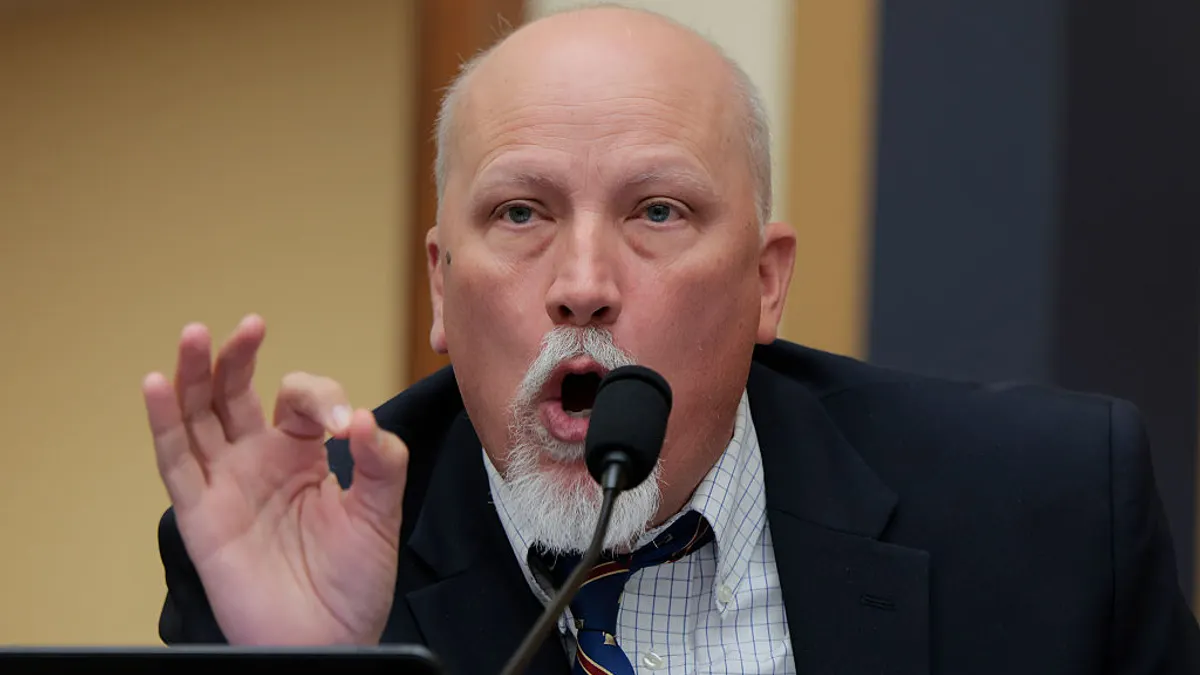
"It's time for it to go," said Rep. Chip Roy, R-Texas. "Its time we meet the moment to overturn Plyler v. Doe."
The push to overturn the 1982 decision — which ensured that undocumented students had a right under the 14th Amendment to receive a public education and has since been the backbone of many other legal decisions — arose during a Wednesday hearing by the House Judiciary Subcommittee on the Constitution and Limited Government.
The House Judiciary committee conducts legal oversight and has jurisdiction over issues related to the federal court system, and historically has triggered presidential impeachment proceedings.
"Plyler is constitutionally indefensible, having no basis in law or even common sense," said Roy, the subcommittee’s chairman, adding that "the effects of the Plyler decision have become worse since 1982."
Often conflating English learners and their additional educational expenses with those of undocumented children during the hearing, Roy and other Republicans argued that educating undocumented children burdens taxpayers, states and the government.
On the other hand, Democrats contended that undocumented children grow into productive and innovative citizens who contribute to the economy after receiving an education.
"Plyler did not place an undue financial burden on America — rather, it has paid big dividends for our country," said Rep. Jamie Raskin, D-Md., during the hearing.
The effects of overturning Plyler
Citing English learner expenses, Republicans said that not being required to educate undocumented children would free up district dollars and other resources for American students.
"Such data should prompt a broader discussion about demands placed on schools and educators who must use limited resources meant for American students by American taxpayers to help immigrant children achieve proficiency standards," Roy said.
However, Thomas Saenz, president and general counsel of the Mexican American Legal Defense and Education Fund and a witness at the hearing, said overturning the Supreme Court case would incentivize children whose peers or siblings are undocumented to also skip school and make it nearly impossible to enforce truancy policies.
"It would leave thousands and thousands of children on the street during the daytime rather than being in school," he said. "The fact is that eliminating Plyler would threaten the continuance of public education. Why? Because kids out of school have a tendency to attract their peers to leave school, as well."
Plyler, which challenged a Texas law requiring undocumented immigrants to pay a “tuition fee” for their children or be barred from enrolling entirely, has also served as the legal basis for many other more recent decisions from Supreme Court and lower courts.
"You have to assume that the theory that there's no rational basis that would strike down the Texas law means that there's no rational basis standard to strike down excluding disabled kids from school. They're also expensive. Their education is more expensive," said Saenz. "So you can imagine they would be the next target."
However, witness Matt O'Brien, deputy executive director of the Federation for American Immigration Reform, said the Supreme Court should not have had the power to decide whether undocumented immigrant children have a right to a free public education.
"That is a decision that if Congress wished to make, it probably could have. But it in no way fell within the purview of the court," he said.
What do others say?
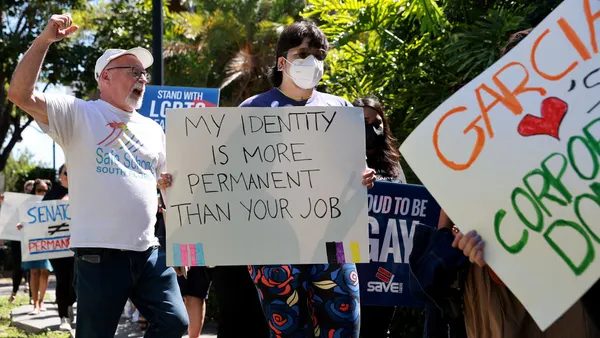
The underlying push to overturn Plyler has been controversial.
In a March 17 letter to Raskin, Democratic Texas state representatives said they were "deeply troubled" by federal lawmakers revisiting the case.
"Simply holding a hearing to question whether children should have access to public education sends a damaging signal to schools, educators, and families," said state Reps. Ramón Romero, Jr., and Gene Wu. "At a moment when sweeping immigration enforcement actions are already creating fear and instability across the country, raising the prospect of denying children access to education only deepens that uncertainty."
Some conservative organizations have previously echoed sentiments similar to those expressed against Plyler during the Wednesday hearing.
"Illegal immigration is not a victimless crime," wrote Lora Ries, director of the Heritage Foundation's Border Security and Immigration Center, in a February report. "It has clear and significant costs for a school district as well as teachers and students in the classroom. School districts cannot appropriately budget for unknown numbers of students who suddenly arrive in their school district following illegal entry into the country."
However, superintendents have said that fewer immigrant students coming into their districts — which they say is a result of heightened immigration enforcement activity over the past year — could result in the loss of millions of public education dollars and negatively impact all students.
Other efforts
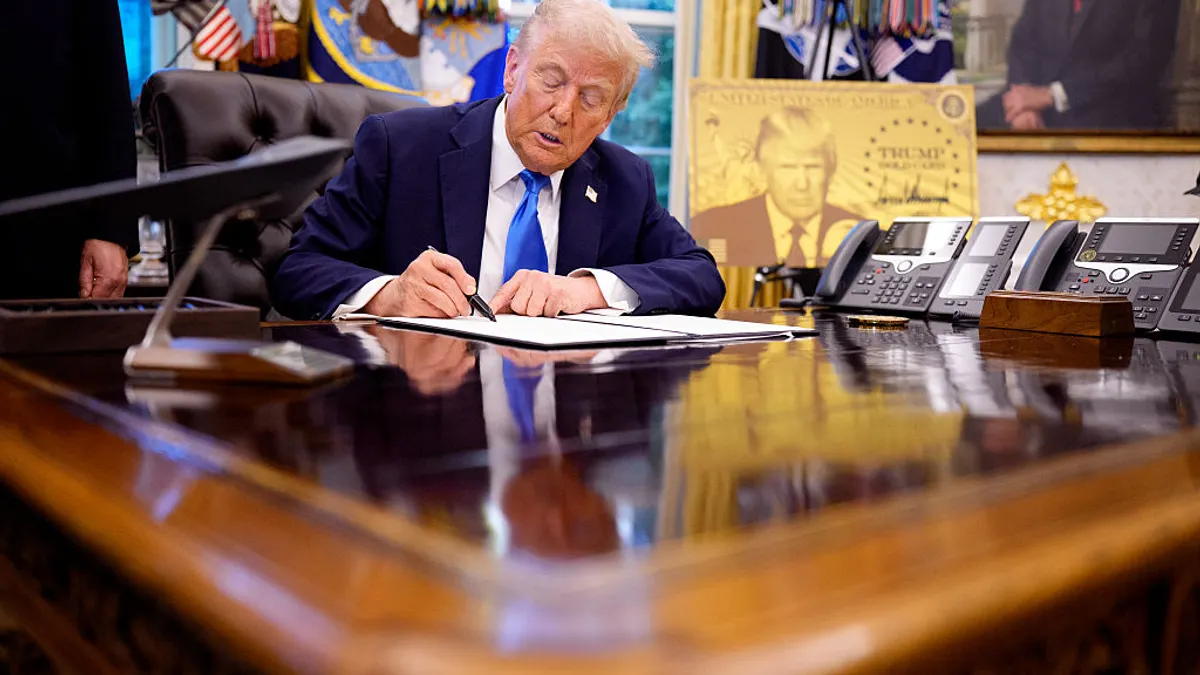
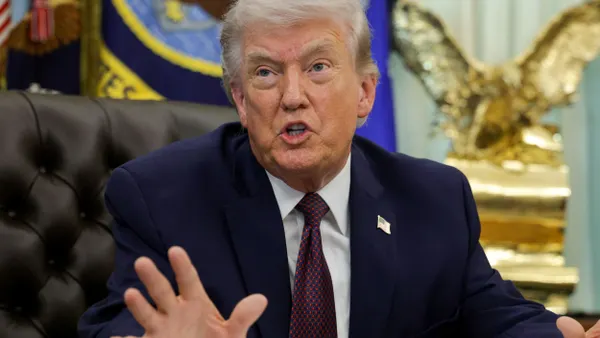
The push to overturn Plyler is the latest move by Republican leaders and the Trump administration to disqualify children from education or related services based on their immigration status.
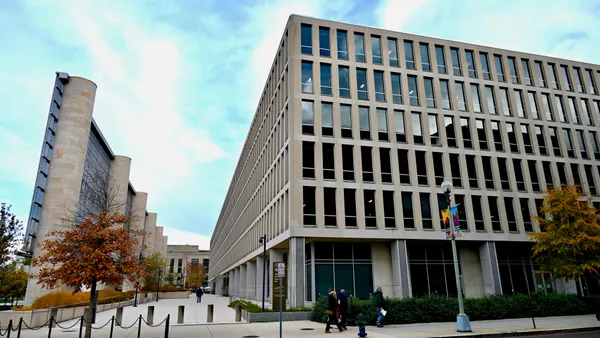
In July, federal agencies including the U.S. Department of Education attempted to scale back access to a number of federal programs based on immigration status — including education-related programs such as Head Start, tuition for dual enrollment, adult education, and career and technical education training programs.
The multi-agency effort impacting a handful of programs was put into motion by President Donald Trump’s executive order “Ending Taxpayer Subsidization of Open Borders,” issued in February 2025.
The changes were promptly challenged by 20 states and the District of Columbia in a lawsuit against the government that said restrictions to previously inclusive programs like Head Start will hurt low-income families and lead to the ”collapse of some of the nation’s most vital public programs.” It led to a temporary pause on the administration's policy change.
As part of the winding down of the Education Department, the administration also closed the Office of English Language Acquisition, which supported services that many immigrants — undocumented or otherwise — and U.S. citizens depend on to attain English proficiency.
According to the Heritage Foundation, six states also introduced legislation or a rule concerning undocumented children students in public schools last year, on issues ranging from collecting immigration status and reporting that data to state officials to charging tuition.