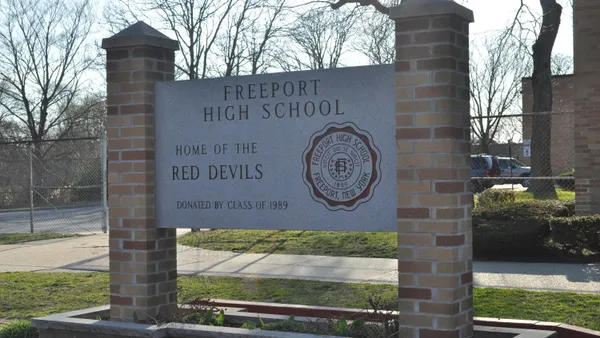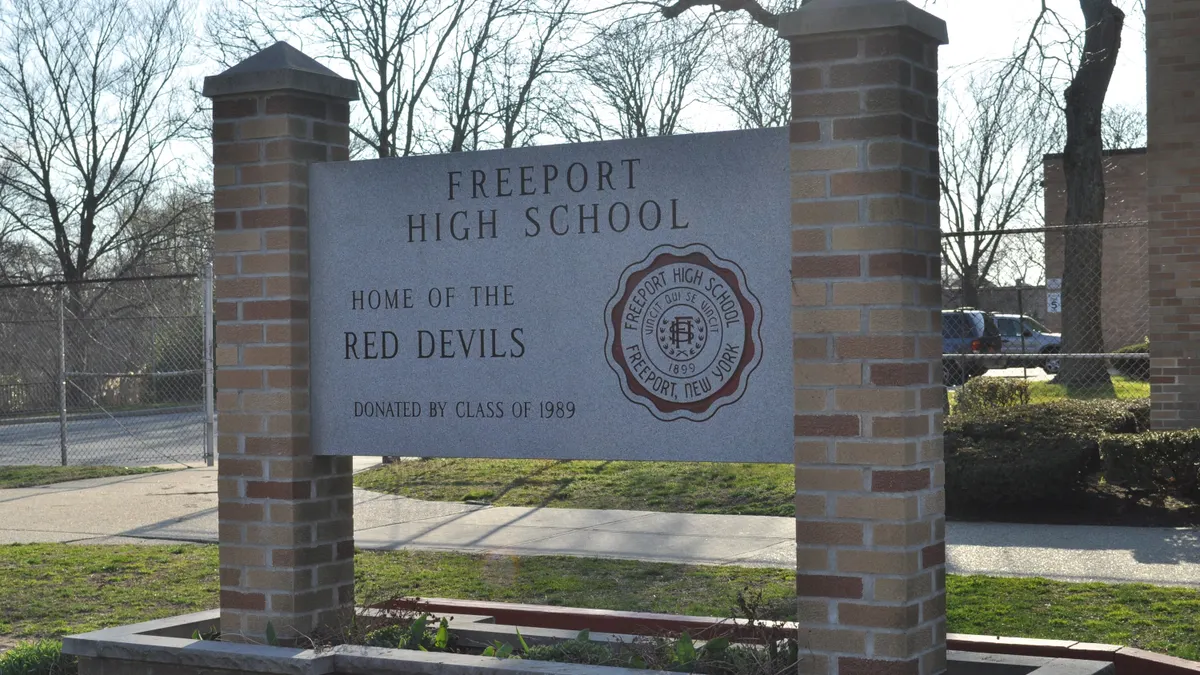

A White former high school psychologist failed to show that she suffered discrimination on the basis of her race and disability when, in part, a co-worker allegedly referred to her as “Karen,” a federal judge held in an Oct. 20 decision.
The incident cited in D’Aiello v. Freeport High Schools occurred in 2021, when the plaintiff claimed that she and another White employee were greeted by an assistant principal’s secretary, who said: “Here comes Karen 1 and Karen 2.” The plaintiff understood “Karen” to be a derogatory term for White women and raised the issue with leadership.
Per court documents, a meeting was held afterward in which the secretary allegedly mimicked the plaintiff’s way of speaking and mannerisms, which the plaintiff perceived to be related to her disability. The plaintiff asked the secretary to stop, which she did. The secretary also apologized for the “Karen” remark.
As the meeting progressed, however, parties to the conversation expressed disagreement about whether the term represented a racial remark. At that point, the meeting “began to devolve.”
The plaintiff later filed a Title VII complaint against school officials and asked Freeport School District, in New York, to follow up on name-calling and aggression but did not check a box on the complaint intake form indicating that race formed a basis of her complaint.
The district conducted an investigation and issued a report concluding that the conduct did not meet the criteria for harassment.
The plaintiff resigned in 2024, stating in a letter to the school that she felt ignored and dismissed by leadership and claiming she had been mistreated by both the secretary and the assistant principal for whom the secretary worked. By that time, she had already filed a lawsuit against the defendants alleging discrimination under Title VII of the 1964 Civil Rights Act, which protects employees from discrimination, including based on race or color; the Americans with Disabilities Act; and New York state laws.
The court granted summary judgment to the defendants on the plaintiff’s federal claims and declined to address her state claims.
Specifically, Judge Joan Azrack of the U.S. District Court for the Eastern District of New York wrote that the Title VII claim failed as a matter of law because she could not identify any adverse action that occurred as a result of the alleged conduct.
The plaintiff cited harm such as emotional distress and expenses for medication and leave. But such effects do not themselves constitute actionable adverse actions under the harm standard established by the U.S. Supreme Court in the 2023 decision Muldrow v. City of St. Louis, in which the high court said that plaintiffs must show “some harm” regarding employment as a result of discriminatory action, Azrack held. The Muldrow decision eliminated federal courts’ elevated standards requiring discrimination plaintiffs to show “significant” harm from alleged discriminatory conduct.
The judge added that the “Karen” comment, along with similar remarks cited by the plaintiff, were not adverse actions because they did not materially affect her employment. Similarly, the judge held that the plaintiff failed to present evidence that the district did not conduct a proper investigation into the behavior.
“Although the remarks may have been ‘unpleasant’ to her, that alone does not constitute a materially disadvantageous change in employment sufficient to qualify as an adverse action,” Azrack said.
Legal experts earlier this year predicted to K-12 Dive that schools could expect to see the script flipped on who files discrimination complaints, with a potential upswing in complaints filed by White and male students and teachers. Such cases allege that White or male individuals were discriminated against on the basis of their race or sex.
In the K-12 arena, these types of claims are not necessarily limited to employees. For instance, the 1776 Project Foundation, a conservative education advocacy nonprofit, sued Los Angeles Unified School District on Jan. 20 over the district’s student integration efforts. The foundation said in its lawsuit that the district’s policies discriminate against “a new minority: White students.”
The challenged integration program focuses on schools with resident populations that are 70% or more Hispanic, Black, Asian or other non-Anglo. The lawsuit said those schools get funding to support class size reductions and are also required to hold two parent-teacher conferences during the school year, which the 1776 Project Foundation said results in discrimination against White students.
Naaz Modan contributed to this story.