Kara Ball is an education professor at Reach University, academic officer with Teacher Created Materials and a consultant with Understood.org.
In most schools, STEM doesn’t live in a dedicated lab or as a standalone program.
It lives in science blocks, project days and engineering challenges. It’s squeezed into packed schedules and moments when educators are doing their best to integrate hands-on learning with limited time, training and support.
Districts are facing persistent educator shortages, larger classes and caseloads, and growing pressure to “do STEM.” Educators are being asked to integrate science, technology, engineering and mathematics experiences for increasingly diverse learners while managing growing instructional demands and fewer resources.

For students with learning and thinking differences, STEM can be both highly engaging and deeply challenging. Its flexibility, creativity and hands-on nature often support learning through doing.
But when experiences are not intentionally designed, those same features can create barriers. Open-ended expectations can feel vague. Materials can create overwhelming sensory experiences. And unclear success criteria can turn curiosity into frustration.
This tension makes the moment urgent. If schools want STEM to be accessible, not just aspirational, neuroinclusive design must be built into how STEM is integrated across general education classrooms.
Sustainable STEM integration starts with supporting educators
STEM education is often framed as a pipeline to fast-growing careers, but that framing misses its greatest strength. At its best, STEM is a cultivator of curiosity, a space where students learn how to think critically, communicate ideas, collaborate with others, and iterate on their thinking over time.
Those skills don’t have a shelf life, and they matter in every career field.
Well-designed STEM experiences include clear criteria and constraints, or guardrails that define the problem space, while allowing creativity to flourish between those endpoints. As long as students stay within those parameters, there’s room to explore, test ideas, fail safely and improve again and again within a set timeframe.
For many neurodivergent students, this structure-with-flexibility can be incredibly empowering. Divergent thinkers often excel at generating novel ideas and seeing solutions others might miss. But without explicit expectations, sensory-aware material choices, and clear pathways for success, STEM activities can quickly become overwhelming.
Teacher support is the key lever. When educators are given time, funding and permission to rethink how STEM experiences are designed, they can make intentional choices about materials, pacing and how students demonstrate understanding.
Grant-funded classroom projects, including those supported by partnerships with nonprofits and companies, have shown that even small shifts can make STEM more accessible.
For teachers, this might mean offering clearer success criteria, reducing sensory overload in materials, or building in structured opportunities for iteration. For students, it means knowing what’s expected, having multiple ways to engage, and learning through trial, feedback and revision.
This kind of design does not lower rigor; it makes rigor visible and achievable.
Strategic partnerships help schools do more with limited resources
As districts continue to do more with less, partnerships with nonprofits and community organizations offer ways to expand capacity without overburdening educators. To make STEM truly accessible for all learners — especially students with learning and thinking differences — teachers need support, resources and intentional design in their classrooms.
Recently, I won a Bezos Courage and Civility Award and directed the $5 million grant to Understood.org to expand the inclusive STEM work we’ve started together, helping teachers bring neuroinclusive practices into more classrooms and reach more students and families.
Collaborations like this provide the structures and supports that teachers need to make STEM accessible for all students, and can support schools by:
● Providing professional learning and coaching focused on neuroinclusive STEM design.
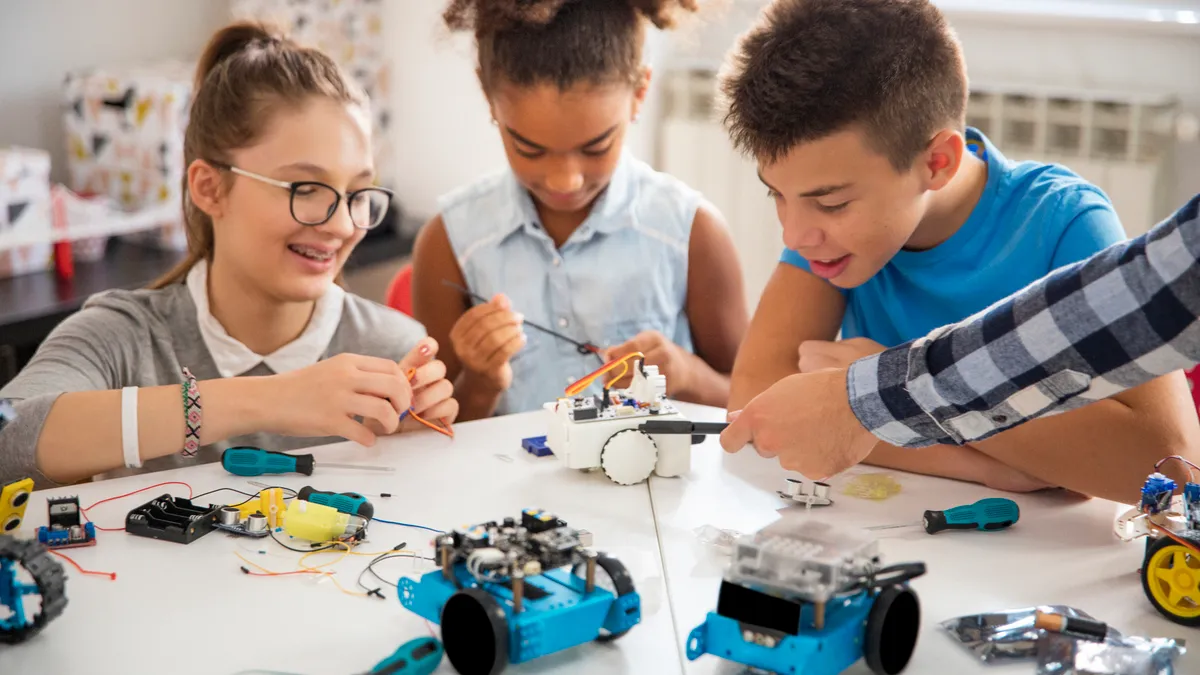
● Supplying classrooms with hands-on STEM materials.
● Supporting general education teachers in integrating STEM without formal training in those subjects.
When aligned with district priorities, these partnerships help schools move from isolated, one-off STEM activities to more intentional, accessible integration across classrooms.
Investing in neuroinclusive STEM benefits all learners
STEM education doesn’t need to be a luxury program to be transformative. When thoughtfully integrated into general education classrooms, it can become one of the most inclusive and powerful learning spaces that schools offer.
The future of STEM education isn’t about asking students to decide on their careers early. It’s about ensuring that all students have access to experiences that build curiosity, critical thinking, communication, creativity and collaboration — and the chance to consider where those skills might lead them.
For students with learning and thinking differences, access to these experiences matters just as much as content mastery. When STEM is intentionally integrated into classrooms, it becomes a place to explore ideas, take risks, learn from failure and build confidence. It opens doors to new ways of thinking and imagining future possibilities.
District leaders play a critical role in making this possible.
By investing in teacher support, selecting inclusive materials, and partnering with nonprofits and community organizations that understand neurodiversity, districts can ensure that STEM education is accessible, flexible and meaningful for more students.
Ultimately, the goal of STEM education is to help students engage with the world around them, grow through curiosity and iteration, and imagine new possibilities for the future.




 Dive Awards