Dive Brief:
- School staff should prepare to take measles prevention and response measures as cases in the U.S. are more than double so far this year compared to all of last year, the National Association of School Nurses advised in a statement Thursday.
- Specific recommendations from NASN include that school nurses should review immunization records and follow up with families when a dose or record is missing. The group also said school staff should work with their local health department to verify a diagnosis if a measles case is suspected.
- Measles — a highly contagious respiratory illness — can cause serious health issues or even death. In addition, the quickly spreading virus can lead to lost learning time for students.
Dive Insight:
The NASN advisory follows a Nov. 17 announcement by the Pan American Health Organization that the U.S. has lost its measles elimination status — a distinction the country has held since 2000. This does not mean that all parts of the country are experiencing outbreaks, but it does mean the virus has circulated continuously for at least a 12-month period, the PAHO explained.
As of Nov. 19, 5,838 measles cases have been confirmed in the U.S. this year — more than double the 2,289 recorded for all of 2025. The number of measles cases in the U.S. this year is the highest since 1991.
According to the U.S. Centers for Disease Control and Prevention, 92.4% of kindergartners in the 2025-26 school year were vaccinated against measles, mumps and rubella. That's slightly down from 92.5% during the 2024-25 school year
The MMR vaccination rate for kindergartners has fallen in recent years, with blame largely falling on the rise in vaccine skepticism and political mixed messaging. The CDC and the American Academy of Pediatrics both recommend that children get the two-dose vaccine.
All states and the District of Columbus require the MMR vaccine for school-age children, but 45 states and D.C. allow exceptions for religious or personal beliefs, or both, according to an August post by KFF, a nonprofit health policy research, polling and news organization.
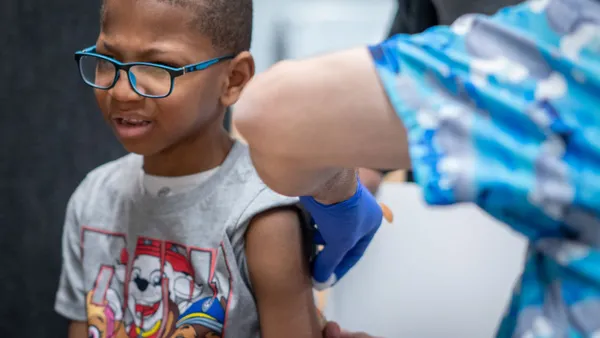
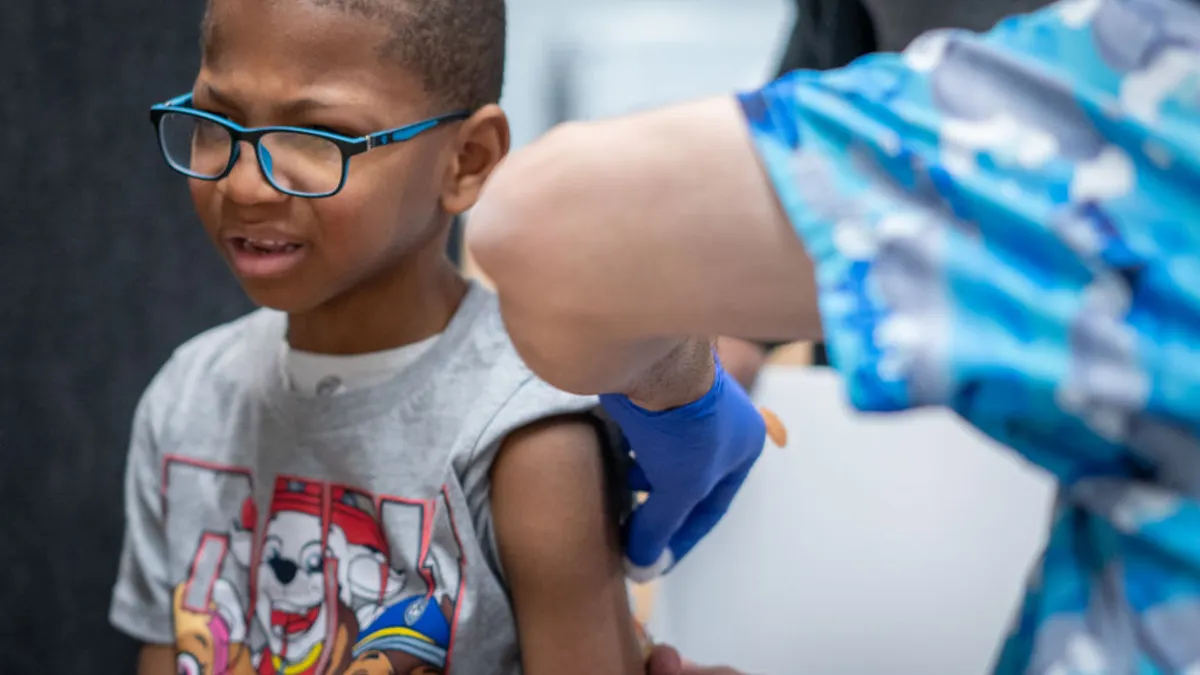
In addition to preventing measles cases in schools by reviewing immunization records, NASN encouraged school nurses to educate school communities about the MMR vaccine and help families find a place to vaccinate their child.
If a case in school is suspected, NASN said, school nurses should work with administrators to reduce further exposure, identify students who may need medical follow-up, identify children with MMR exemptions, and help families understand the best next steps. Timely guidance from schools after a measles exposure is especially important for families whose child has vulnerable health conditions, the association said.
It's also important for schools to have a response plan, including protocols for notifying families about an exposure, NASN said.
"We urge superintendents and principals to support school nurses with protected time as they follow up with families and to review the school’s measles response plan together," the association said. "The risk varies by community, but every school can take steps now to protect students.”